STACKD is live. Build and preview your own fitness creator app with modular blocks, brand kits, and built in monetization.
Open STACKD →The Opportunity
Fitness creators today rely on fragmented tools. Instagram and TikTok for discovery, YouTube for retention, and platforms like Alo Moves or Peloton for monetization. Each step lives on someone else's brand, with limited ownership and customization.
STACKD explores a white label product direction: a modular platform where creators own their app, voice, and revenue lanes from day one.
Literature Review
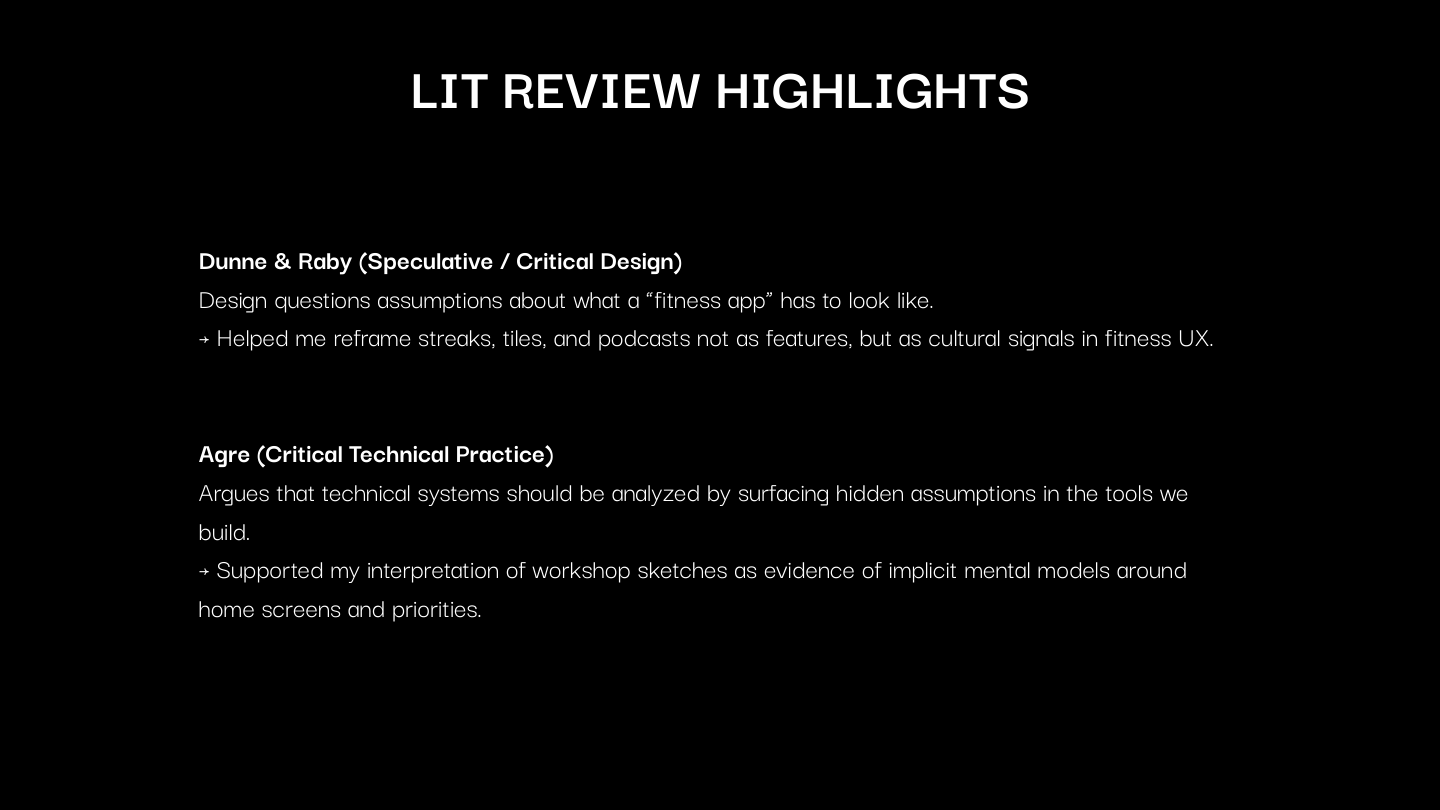
Dunne & Raby (Speculative / Critical Design)
Design questions assumptions about what a fitness app has to look like.
→ Helped reframe streaks, tiles, and podcasts not as features, but as cultural signals in fitness UX.
Agre (Critical Technical Practice)
Argues that technical systems should be analyzed by surfacing hidden assumptions in the tools we build.
→ Supported my interpretation of workshop sketches as evidence of implicit mental models around home screens and priorities.
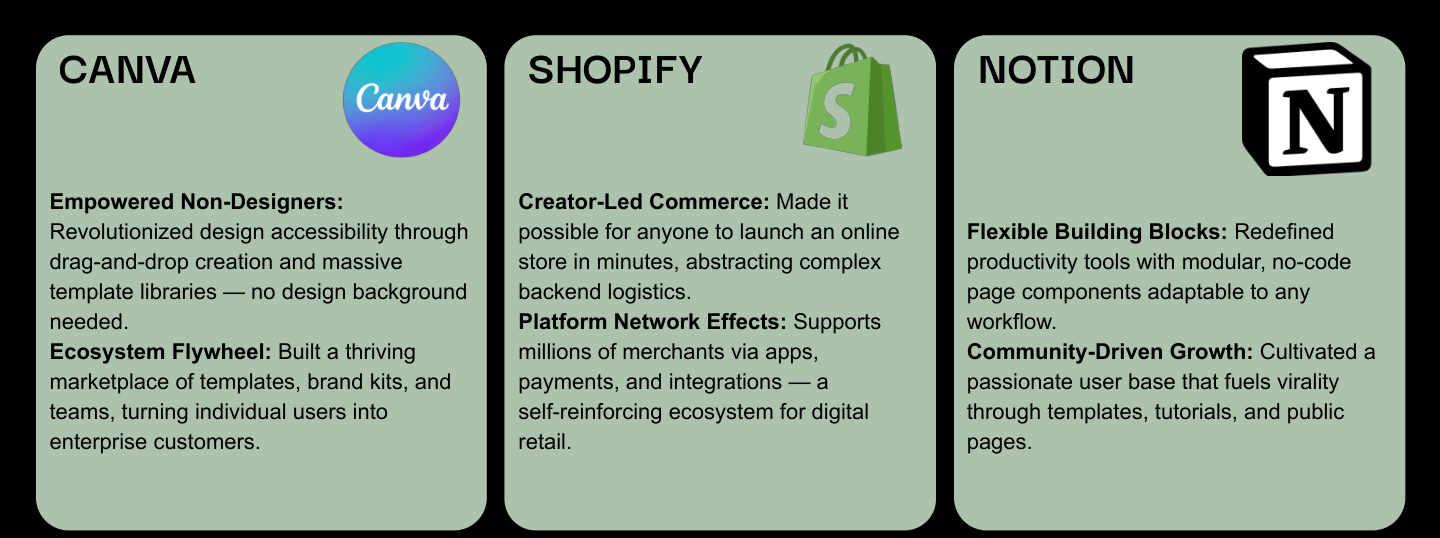
Products That Inspired the Direction
Canva, Shopify, and Notion each democratized creation in their domain. STACKD applies those same principles to the fitness creator economy.
The Fitness Creator Space
Creators move through three stages: recognition on social platforms (free), retention through long form content (free), and conversion through owned subscription products (monetized). STACKD targets the gap between retention and conversion, where brand ownership matters most.
Fitness Creator Space
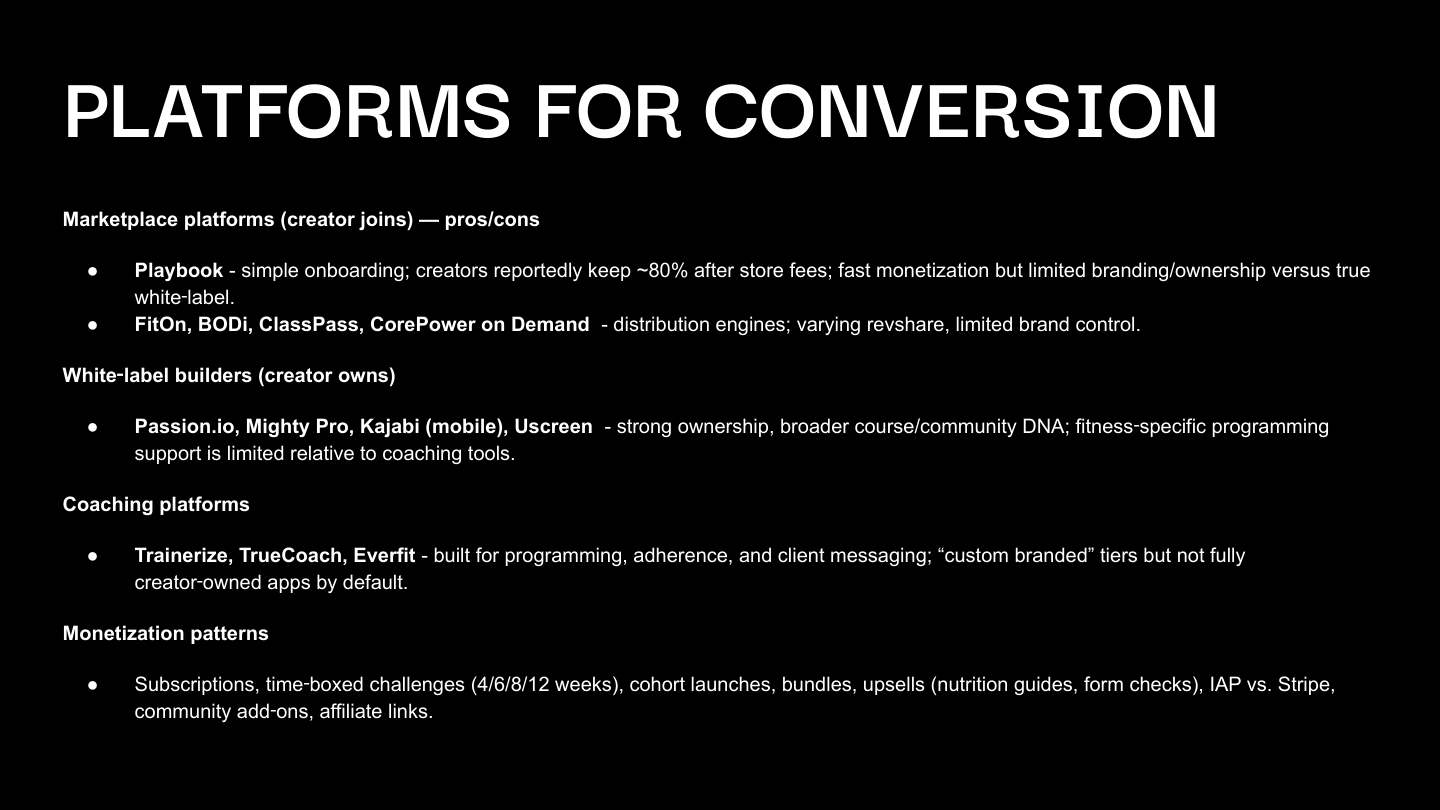
Platforms for Conversion
The landscape splits between marketplace platforms, white label builders, and coaching tools, each with different tradeoffs around ownership, fitness specificity, and monetization.
Marketplace platforms
- Playbook: fast onboarding, ~80% revshare, limited branding
- FitOn, BODi, ClassPass: distribution engines with limited brand control
White label builders
- Passion.io, Mighty Pro, Kajabi, Uscreen: strong ownership, limited fitness DNA
Coaching platforms
- Trainerize, TrueCoach, Everfit: programming and messaging first, partial branding
Monetization patterns
- Subscriptions, time boxed challenges, cohort launches, bundles, upsells, community add ons
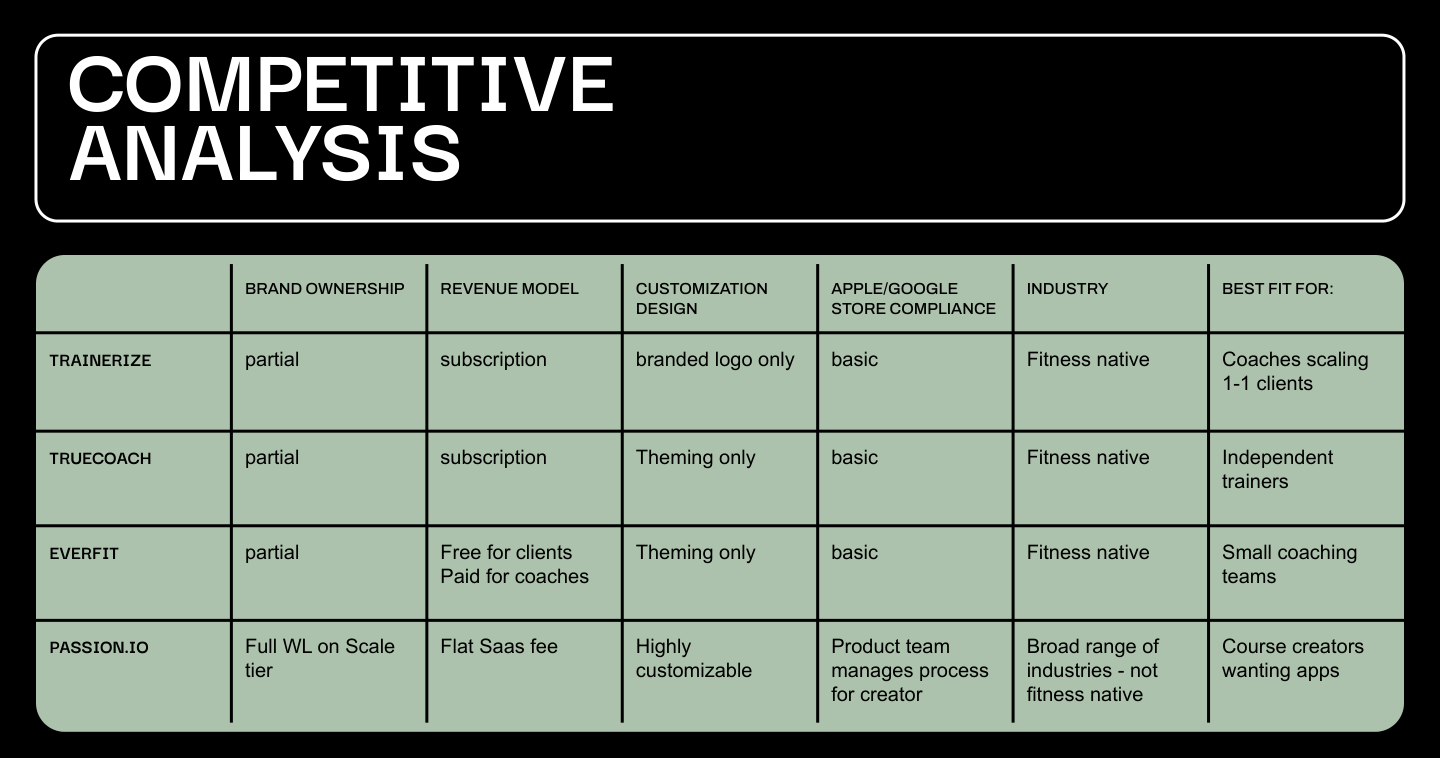
Competitive Analysis
Trainerize, TrueCoach, and Everfit serve fitness native coaching but offer only partial brand ownership. Passion.io delivers full white label customization but lacks fitness specific DNA.
Audience & Demand Trends
Gen Z fitness shift
Gyms and group fitness seen as social hubs. Growth in pilates, strength, and low impact modalities.
Aesthetic led fitness
The pilates and wellness aesthetic continues to drive apparel and content engagement. Creators align content with lifestyle and self care.
Adherence drivers
Daily streaks, check ins, DM accountability, and habit stacks correlate with retention in app and subscription models.
Content format
Short form for discovery (TikTok and Reels), long form for depth (YouTube), mobile apps for structured programs and push notifications.
Interviews
11 interviews across 5 participant groups
Founders
To learn about entrepreneurship
Fitness enthusiasts
To understand their digital skill level
Fitness creators
To understand my target audience
Wellness professional
To get a new perspective
Aspiring fitness app owner
To understand my target market
Workshop Findings
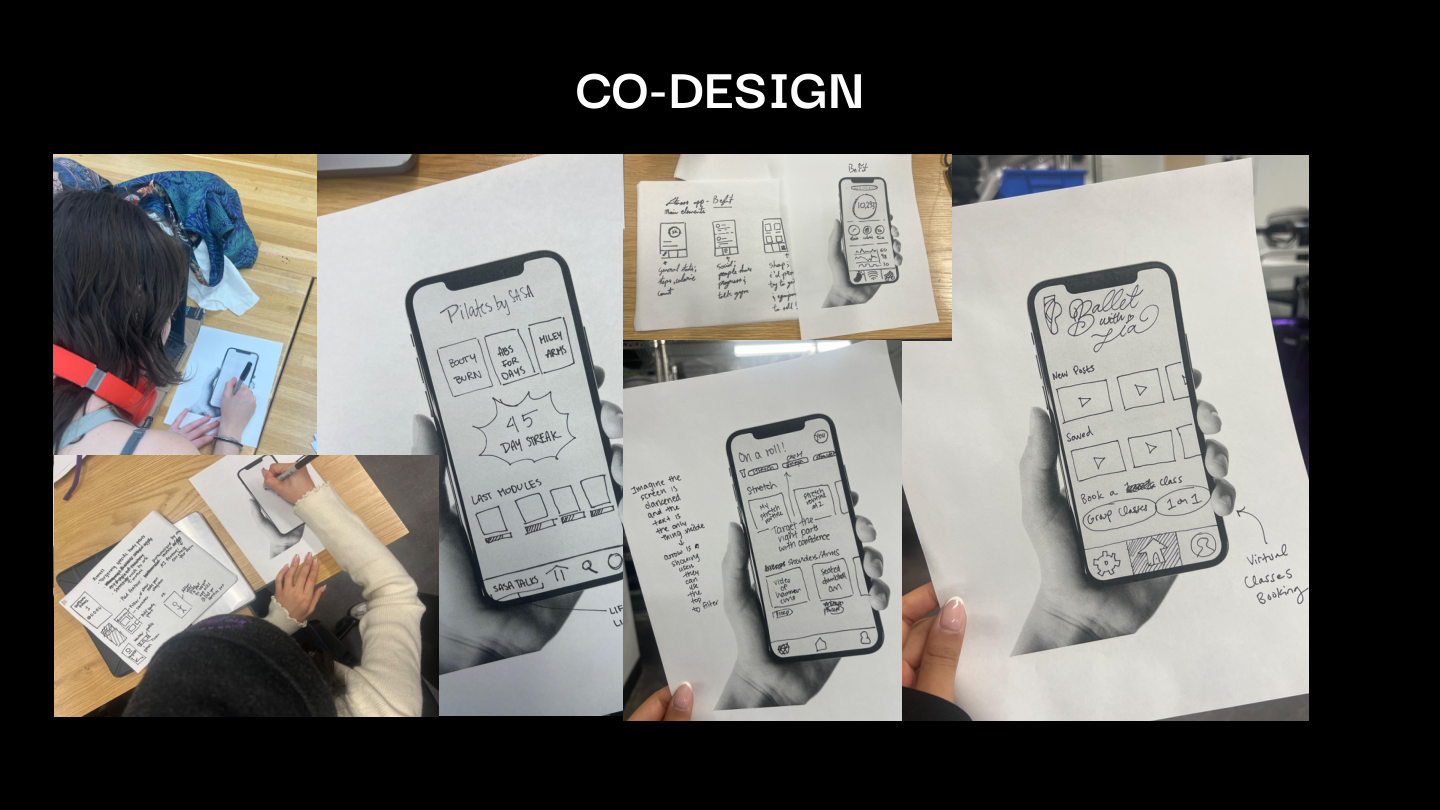
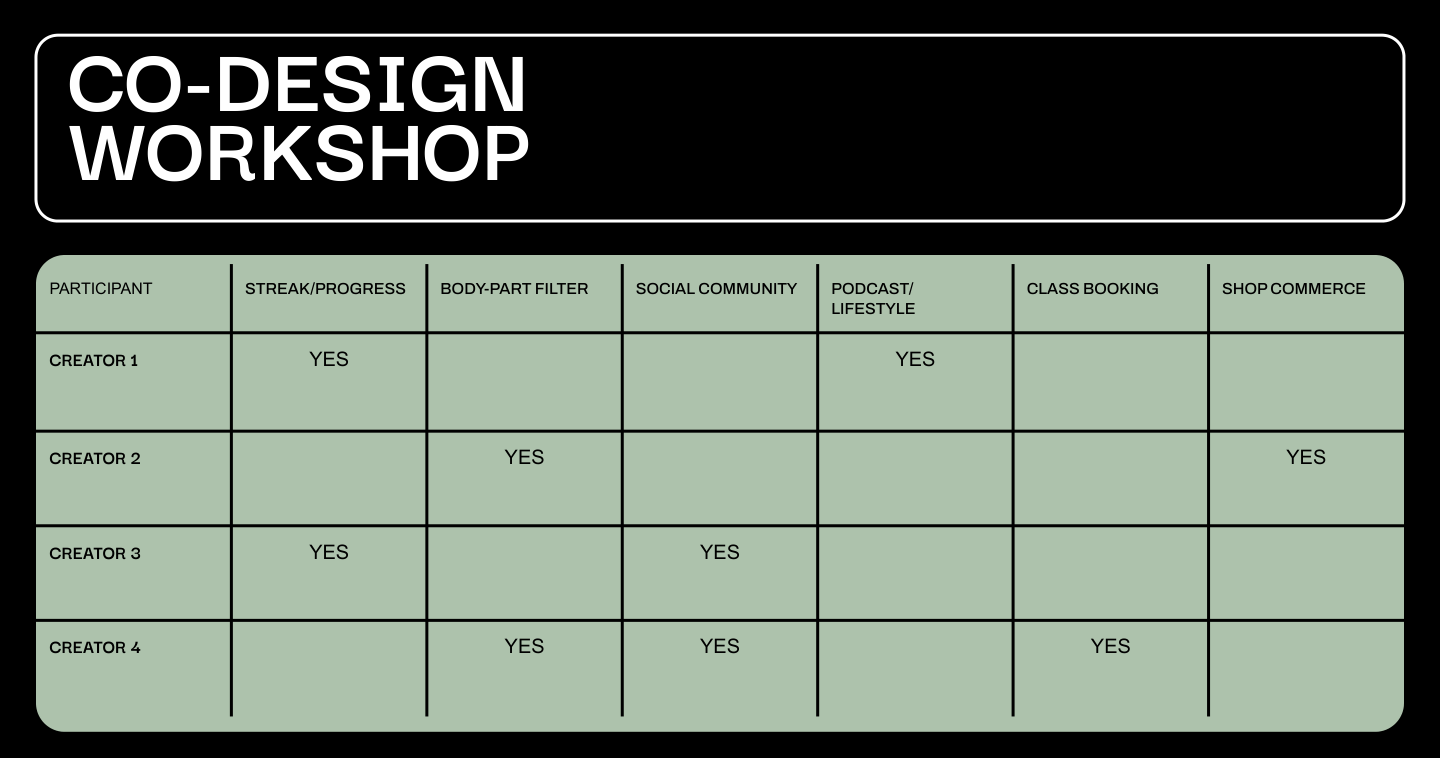
Four fitness creators mapped their ideal home screens across six feature categories. No two layouts matched, which confirmed that interchangeable modules, not fixed templates, are essential.
From Research to Design Principles
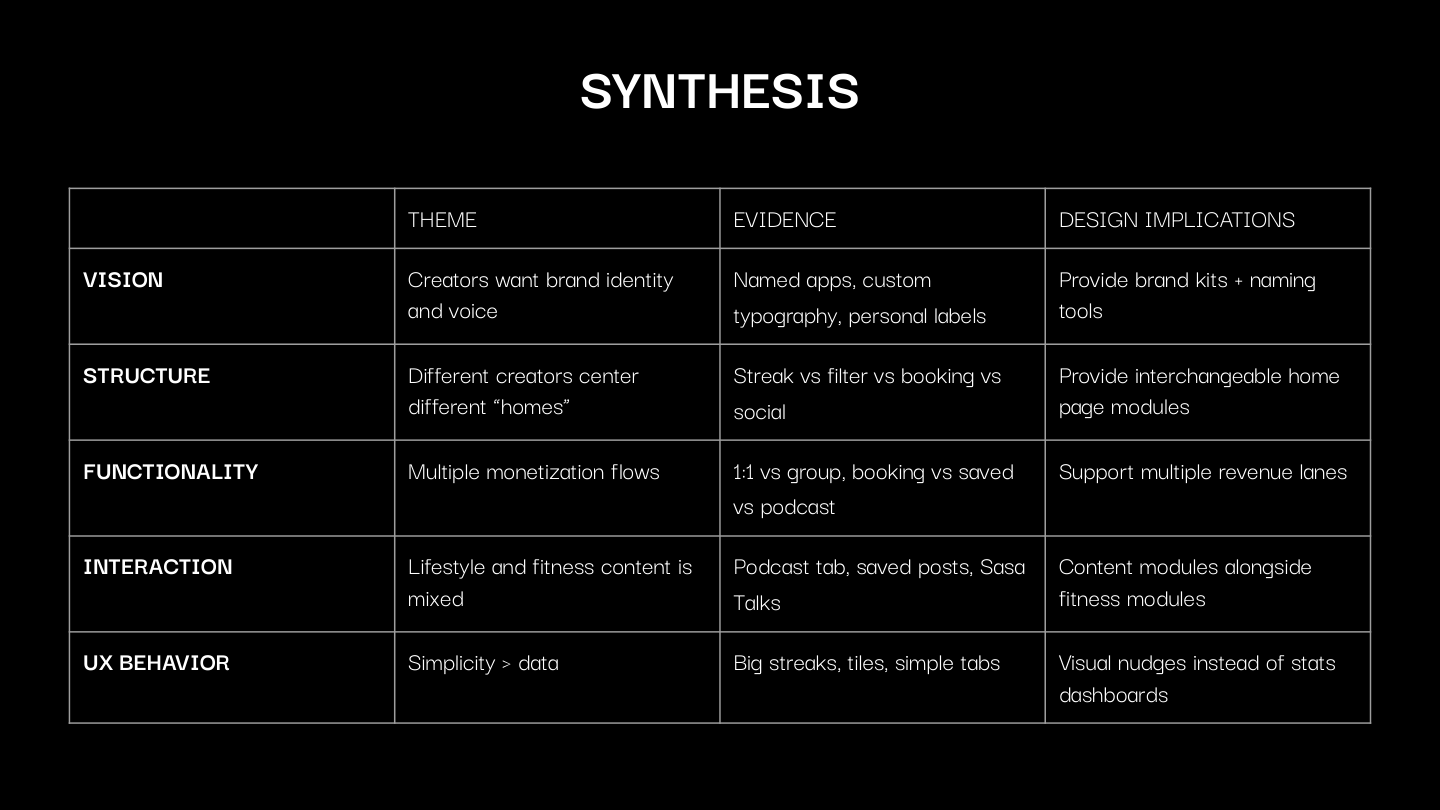
Five themes emerged from interviews and workshops, each mapping evidence to a concrete design implication.
Proposed Product Directions
UI built from interchangeable blocks, not fixed templates
Multiple monetization lanes built in from day one
Brand kit onboarding to reflect creator voice and identity
Simple, motivational UX instead of complex data dashboards
Core Components
The always-on foundation every creator app shares, regardless of which modules they choose to stack on top.
Gray screens
- All components that will never be removed
- Studios and creators
- Calendar, book a new class, and reservations
Try the live product
Build and preview your own fitness creator app directly below, or open it full screen.