INDUSTRIAL DESIGN · FURNITURE · STUDY ABROAD
The Spanish Lily
A lounge chair designed in Copenhagen — inspired by Scandinavian craft, shaped by hand, and built without digital modeling aids.
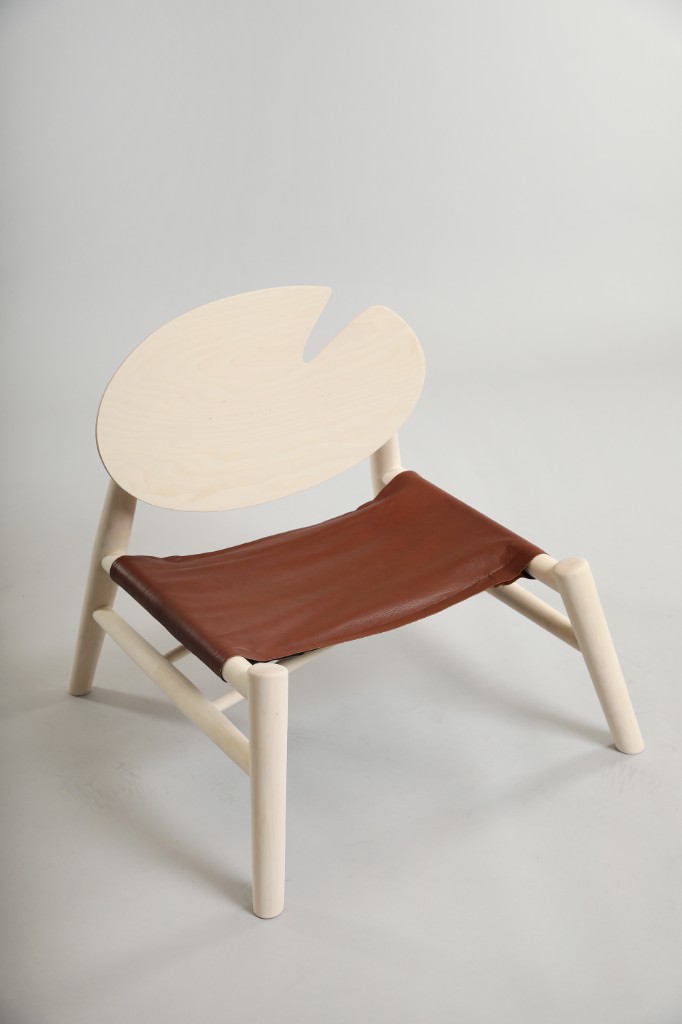
A lounge chair designed in Copenhagen — inspired by Scandinavian craft, shaped by hand, and built without digital modeling aids.
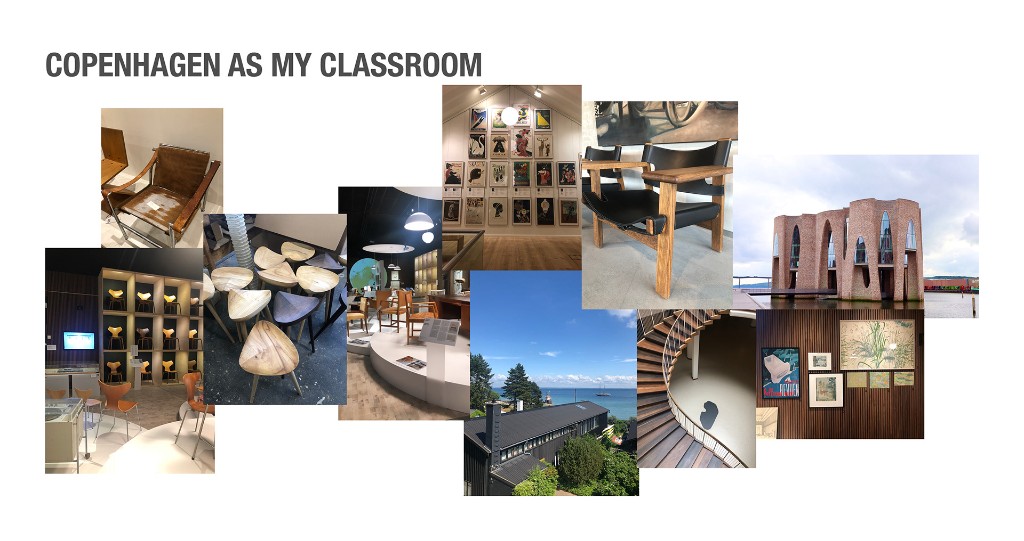
Studying abroad in Copenhagen meant learning design by immersion — visiting showrooms, studying Danish masters, and absorbing the city’s approach to material, form, and craft.
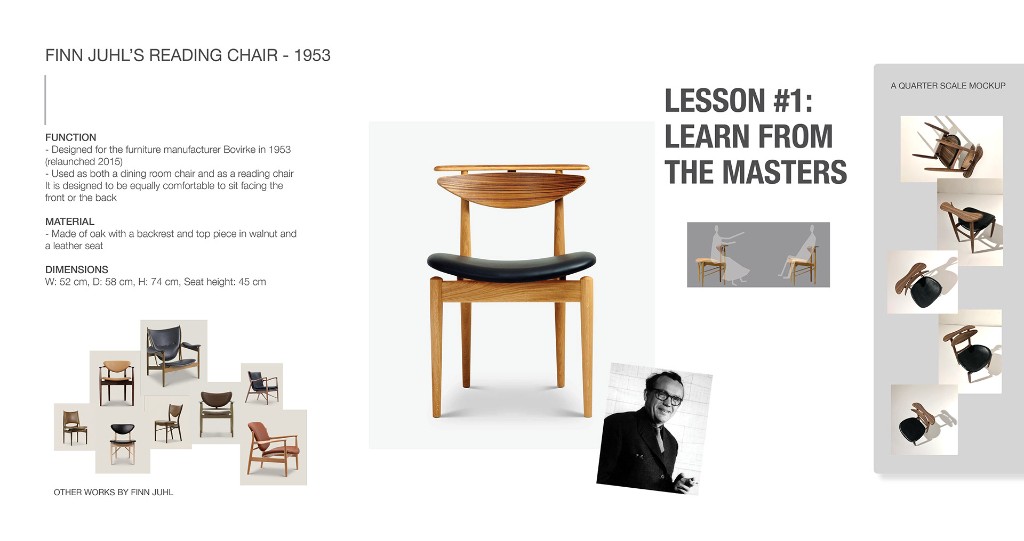
The project began with a deep study of Finn Juhl’s Reading Chair — analyzing its dual-facing function, material palette of oak, walnut, and leather, and the quarter-scale mockup process used to understand proportion before building at full scale.
I explored three directions — an adjustable leather seat within a spherical frame, a bent-wood backrest inspired by a lily pad, and a low lounge form with a possible arm rest — before refining the lily-pad concept through small-scale physical mockups.
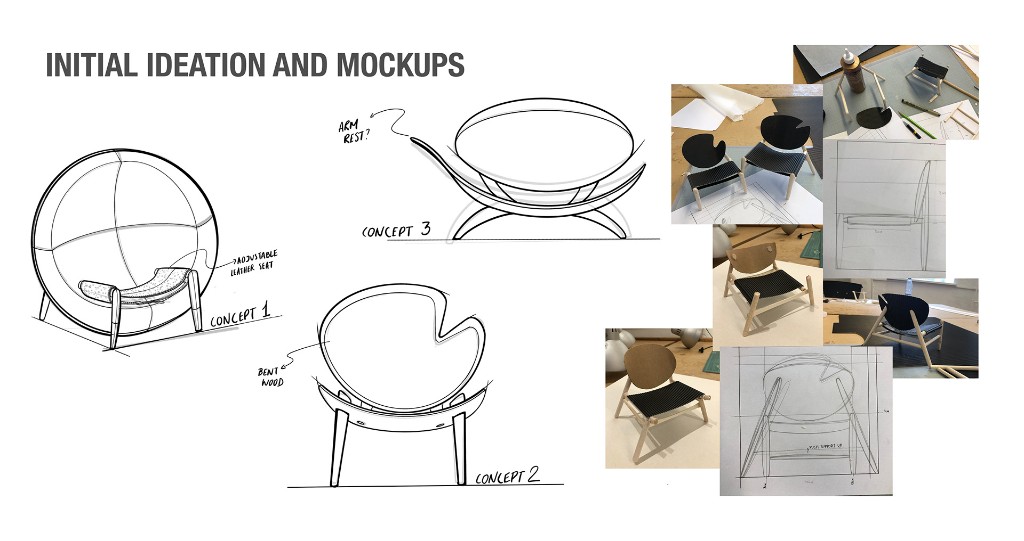
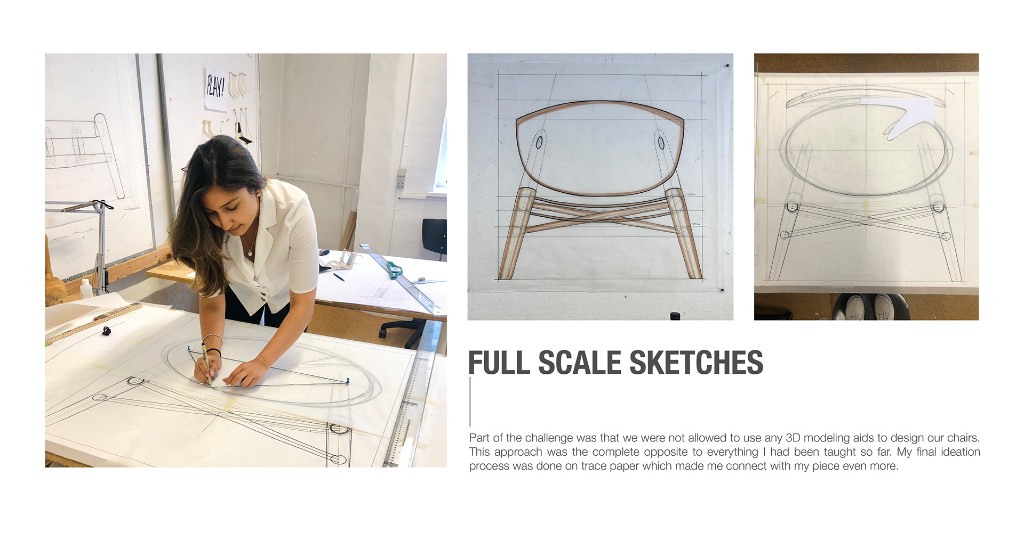
We weren’t allowed to use any 3D modeling aids — the complete opposite of what I’d been taught. Working at full scale on trace paper forced a slower, more tactile process that deepened my connection to the piece.
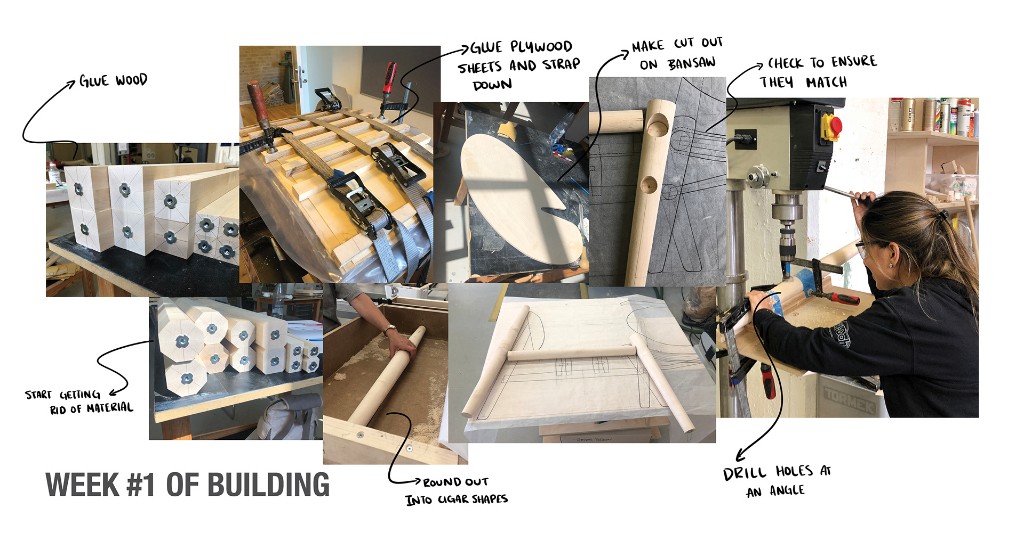
The first week focused on raw fabrication — gluing and laminating wood, cutting the seat profile on the bandsaw, turning legs into tapered cigar shapes, and drilling angled holes to match the full-scale drawings.
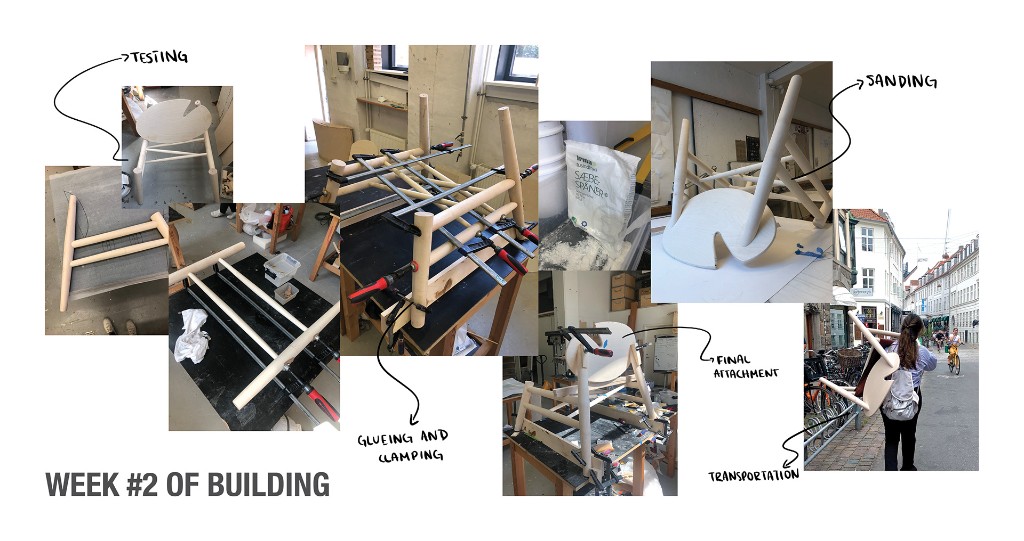
Week two moved into assembly — testing fit, gluing and clamping the frame, sanding, attaching the seat, and carrying the finished frame through the city for final transport.
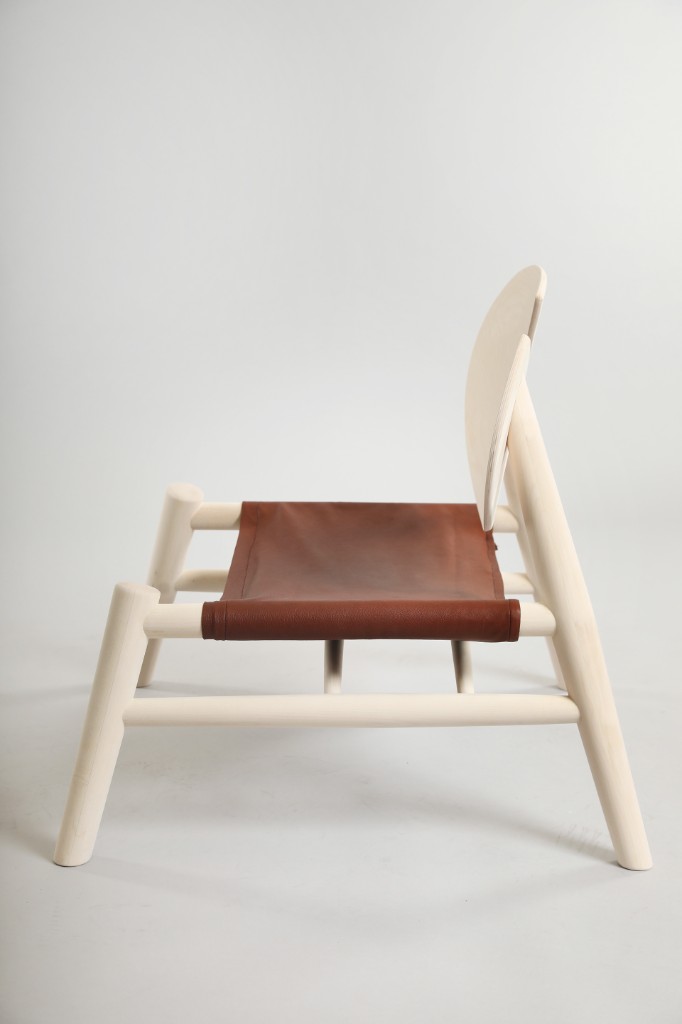
The Spanish Lily combines a lily-pad backrest — with its distinctive notch — a leather sling seat, and tapered ash legs. Simple in form, but every joint and curve was resolved by hand.
This project reshaped how I think about design — slowing down, studying the masters, and trusting the hand as much as the screen. The Spanish Lily is both a chair and a record of learning to make something real, start to finish, in Copenhagen.